
Why Is Sapphire Glass Both Durable and Transparent? The Material Science of Synthetic Sapphire
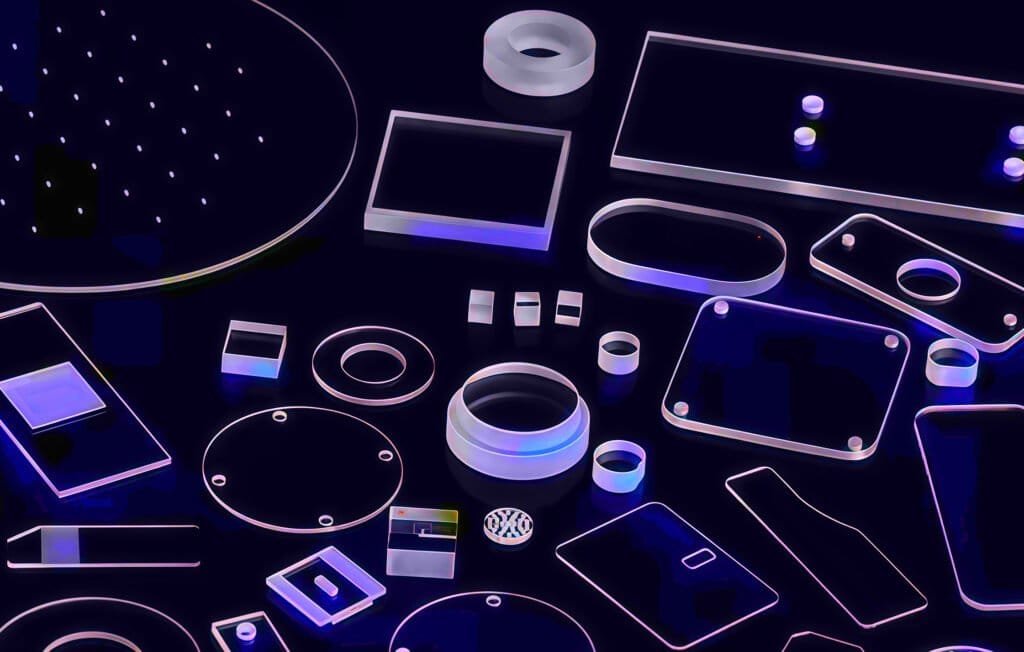
Sapphire glass has become a staple material for high-end watches, primarily due to its exceptional hardness of 9 on the Mohs scale, ensuring exceptional durability and its ability to transmit light with minimal loss. This performance combination, which may appear somewhat contradictory, is the result of the integration of the crystal structure characteristics of synthetic sapphires and precise processing techniques. Since entering the watch industry in the 1980s, sapphire glass has gradually replaced the easily scratched mineral glass and has become a key component in the field of high-end watchmaking.
From the perspective of materials science, sapphire (α-Al2O3) is second only to diamond in hardness. Its hexagonal crystal system structure forms a three-dimensional network through strong covalent bonds, and this dense arrangement makes its surface extremely difficult to be scratched. At present, the flame melting method or the pulling method is commonly used in industry to grow high-purity sapphire crystals. By precisely controlling the growth rate and temperature gradient, large-sized and low-defect single crystal materials can be obtained. During the artificial cultivation process, it may be possible to control the growth direction of the crystal, thus reducing the birefringence phenomenon caused by optical anisotropy. When combined with the double-sided polishing process, light transmittance can exceed 92%. It is important to note that the watch crystal uses a colourless sapphire single crystal, which differs in composition from natural blue sapphire. The colorless version has higher purity requirements because trace impurities such as iron and titanium not only introduce color but also significantly reduce the light transmittance.
The industry typically evaluates sapphire glass from three dimensions: impact resistance is contingent on lattice integrity; the coefficient of thermal expansion affects environmental adaptability; and surface roughness determines optical performance. In the quality control stage of production, manufacturers frequently utilize interferometers and laser scanners to detect surface micro-defects and verify thickness tolerances. This precision enables it to maintain stability even at a high temperature of 1000℃. Sapphire is a material that sets itself apart from traditional watch crystals in that it is not susceptible to corrosion from sweat. Its chemical inertness makes it resistant to the erosion of daily acids and alkalis over an extended period.
In practical applications, the limitations of this material are its high processing cost and considerable brittleness. In order to disperse impact forces, high-end watches are designed with curved edges. Some sports models are enhanced with composite coatings to provide greater resistance to shattering. Despite the inherent challenges posed by the hardness of sapphire, which complicates its processing and maintenance, related technologies are undergoing continuous advancement. For instance, ion implantation and diamond-like coating are being studied to improve its toughness. For consumers, the key value proposition of sapphire glass is its ability to maintain a clear and fresh visual effect even after long-term use, due to its material properties.
