
Analysis of the Technical Threshold for Sapphire Glass Special-shaped Parts
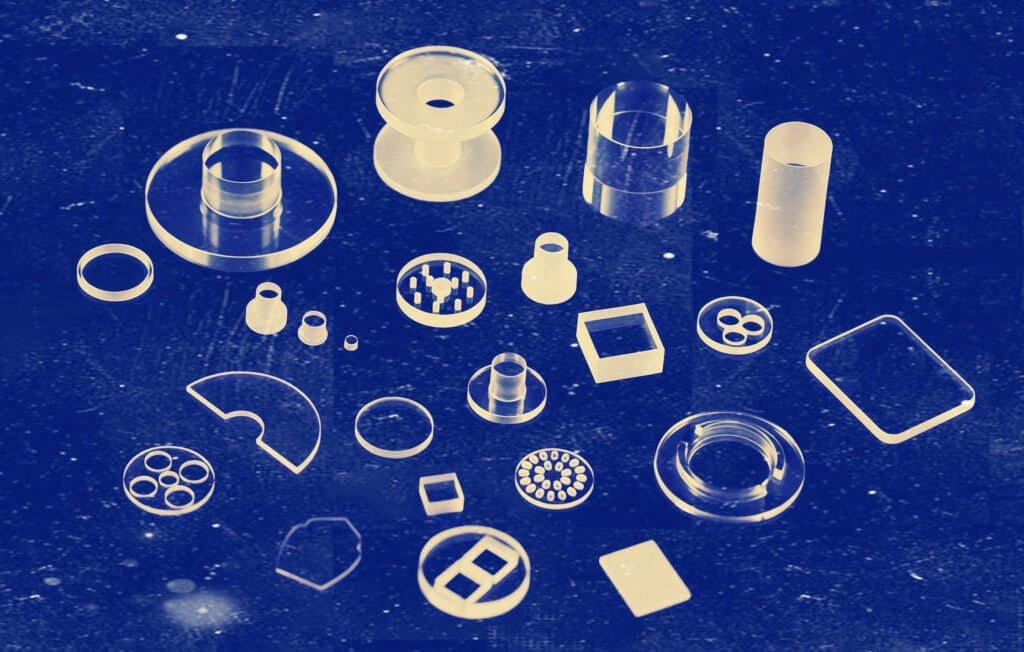
Sapphire special-shaped parts represent a relatively specialized branch in the field of special optical material processing. The irregular-shaped parts refer to sapphire glass components that are different from the conventional circular, square or standard-sized ones. The shapes of these components are typically dictated by their specific application in various scenarios. For instance, their design is influenced by considerations such as the requirements for plates in fibre lasers, the need for insulating gaskets in semiconductor equipment, and the functionality of observation windows in chemical experiments. These components often have high requirements for dimensional tolerances, surface quality and crystal orientation, and thus have high demands on production technology.
Sapphire glass is composed primarily of a single crystal of aluminium oxide. Sapphire glass boasts a number of notable properties, including high hardness, a wide transmission range, high temperature resistance, and high chemical corrosion resistance, making it a suitable material for use in extreme conditions. However, the irregular processing of sapphire glass poses a challenge due to its high hardness and brittleness. Conventional mechanical cutting can be susceptible to chipping and micro-cracks, whereas thermal processing may alter the internal stress of the material. Consequently, the supply capacity of sapphire special-shaped parts is primarily dependent on the precision of the processing technology.
With regard to the division of labour in the industry, the production of sapphire special-shaped parts generally comprises a complete process, from raw material selection to cutting, grinding, polishing, cleaning and inspection. During this process, each step will affect whether the final product can meet the usage requirements. For instance, high-power laser systems have very high requirements for the surface finish of sapphire plates. If polishing is not carried out to the required standard, local scattering will increase significantly, thereby affecting the quality of the beam. In contrast, in the field of chemical research, greater emphasis is placed on the purity and corrosion resistance of materials. It is imperative that all these differences are distinguished in the process parameters used during production.
When selecting a production plan for sapphire irregular parts, there are several key technical indicators to consider. The first of these is dimensional tolerance. If the tolerance is excessively large, it will cause assembly stress; if the tolerance is too small, assembly may not be possible. The second factor to consider is surface roughness, which has a direct impact on optical transmittance and mechanical strength. The third is the control of edge chamfering and chipping. Minor defects may expand into cracks when subject to alternating temperature or vibration conditions. It is important to note that these indicators cannot be fully judged from the appearance and rely more on the configuration of the detection equipment.
From a cost perspective, the price of sapphire glass is significantly influenced by the quality, size and thickness of the crystal ingot. Material loss in the processing of special-shaped parts is also an important cost composition. For instance, when cutting round plates into irregular-shaped ones, the scraps often cannot be reused. If there are many holes or very complex shapes, the scrap rate will also increase accordingly. Therefore, whether the processing path can be reasonably designed during production and unnecessary losses can be reduced directly affects the price of the finished products.
In terms of quality management, random inspection of dimensions, appearance inspections, and essential stress tests are generally carried out on each batch of products. Additionally, for irregularly shaped components used in high-power laser applications, supplementary processes such as transmittance or surface defect detection may be incorporated. It should be noted that an excessive number of inspection items is not necessarily indicative of improved quality, but rather should be matched with the actual working conditions. The value of processing sapphire special-shaped parts lies not only in providing blanks or standard parts, but also in transforming materials into customized products that meet engineering requirements.
