
Key Parameters for Chamfering Processing of Sapphire Glass
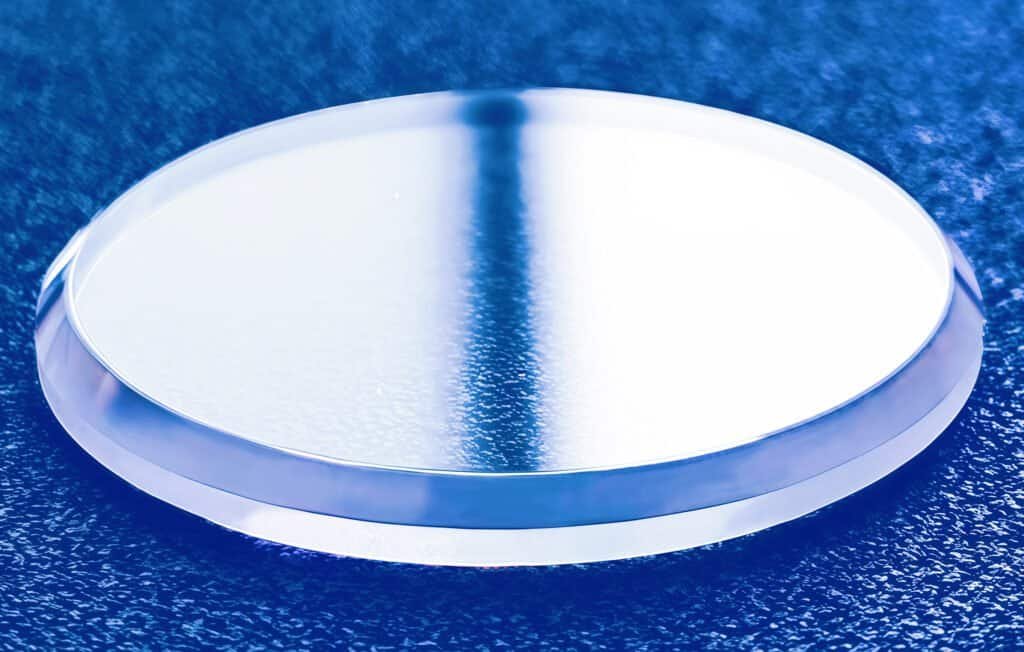
Chamfering is an integral precision processing procedure in sapphire glass manufacturing, widely used in various products, including smartphone casings, smartwatch glass, optical windows, and high-end wristwatch crystals. Given the physical properties of sapphire, the parameters of chamfering directly determine the edge strength, optical appearance, processing efficiency and finished product yield. This article will methodically categorize pivotal chamfering parameters, including the angle and width of chamfering, abrasive, speed, feeding, cooling and surface quality, and investigates their collaborative optimization strategies.
The selection of the chamfer angle has been shown to have a direct effect on edge stress distribution and the light transition form. The angles most commonly utilized are 30°, 45°, and 60°, with customized angles being determined by the specific requirements of the optical design. The 30° angle has been demonstrated to provide a satisfactory optical transition effect and is considered suitable for watch glass and decorative edges. The 45° angle is utilized as a universal angle, taking into account both processing convenience and detection stability. The 60° angle, has been developed to focus specifically on enhancing edge protection capabilities, and is used for components with higher impact resistance requirements.
In terms of influence, a small angle (15° to 30°) can form a longer transition bevel, thereby improving the refraction visual effect and reducing the edge visual thickness. However, it has higher requirements for processing accuracy. A big angle (45° to 60°) offers enhanced resistance to impacts by eliminating more material, thereby significantly mitigating the risk of edge cracking.
It is also crucial to consider the chamfer width (i.e., the C-dimension, referring to the horizontal width of the bevel edge), with typical width values varying depending on the application scenario. Insufficient width can result in inadequate edge protection, an elevated probability of microcracks, and a reduction in drop resistance. While an increase in width can indeed enhance protection, it will also result in the compression of the effective display area, a change in the appearance ratio, and an increase in processing time. Therefore, the optimization principle is to take a significant increase in edge strength as the critical point, to avoid excessive removal, and to balance the range between strength and area.
The selection of grinding wheels and abrasives constitutes the foundation of the chamfering process. The high hardness of sapphire necessitates the use of diamond abrasives, as traditional abrasives are ineffective in removing it. The classification and utilization of abrasive particles is determined by the processing stage. Coarse diamond is commonly used for the rapid removal of allowance; medium diamond is utilized for chamfer forming; and fine diamond is used for fine grinding to reduce surface roughness. While coarse abrasives can considerably enhance grinding efficiency, they can lead to the creation of deep subsurface damage layers. While the utilization of fine abrasives necessitates a greater time investment in the processing stage, a smoother surface can be obtained.
The fundamental purpose of chamfering is to eliminate the source of stress concentration that is present at sharp corners, thereby enhancing the strength of the edge. The high degree of stress concentration in the sharp edges of sapphire under impact renders them susceptible to cracking. A chamfer designed reasonably can disperse the impact load and remove the processing defects left by the previous cutting or grinding. It is important to acknowledge that the chamfering parameters are not fixed; instead, they are contingent on various factors, including the thickness of the sapphire substrate, the specific application scenario, the optical transmittance requirements, and the impact resistance grade. In actual production, experimental analysis and iterative optimization should be conducted according to specific products, in order to identify the most effective engineering balancing between processing efficiency, yield and edge performance.
