
Sapphire Windows | Common Questions on Hardness, Brittleness, and Coatings
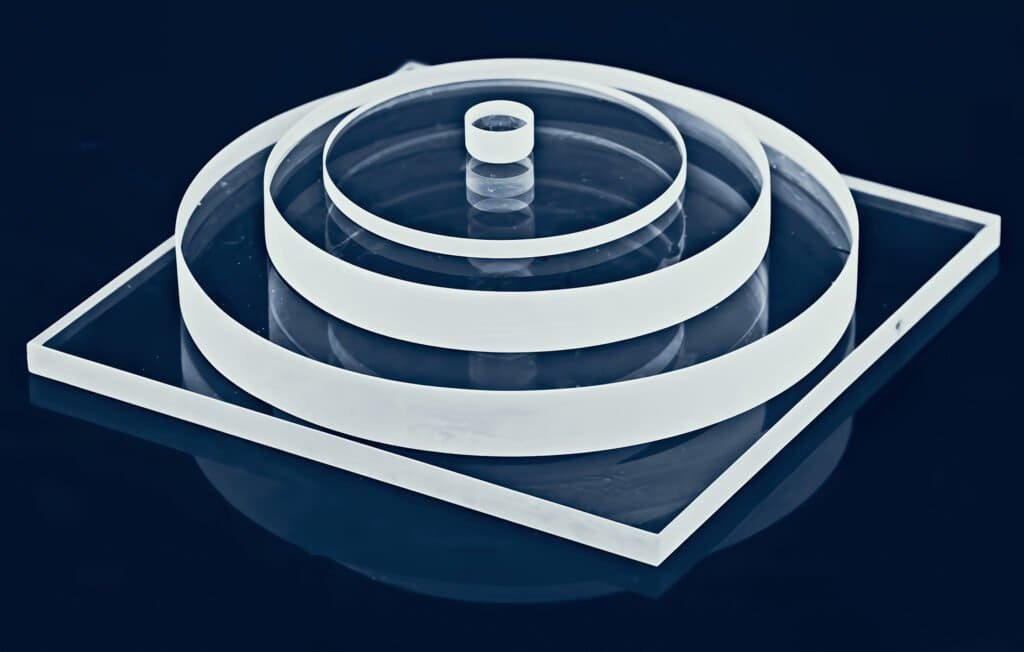
Many people have misconceptions about sapphire windows, believing them to be simply a type of glass with higher hardness. The performance of sapphire glass is dependent on a number of factors, including light transmittance, the coating process, and the coefficient of thermal expansion. The selection varies significantly between different scenarios.
- Core questions
- What are the main differences between sapphire windows and ordinary glass windows?
Sapphire windows are significantly superior to ordinary glass in terms of hardness, temperature resistance and corrosion resistance. Sapphire is composed of aluminium oxide (Al2O3) and has a Mohs hardness rating of 9, which is significantly harder than the typically 5-6 range of ordinary glass. Sapphire has a melting point of up to 2050 °C, making it resistant to both acid and alkali corrosion; in contrast, standard glass is susceptible to deformation and erosion in high temperatures or strong acids. In such instances, the utilization of standard glass in high-temperature or corrosive environments may potentially compromise its structural integrity, thereby increasing the risk of breakage, reducing the operational life of the equipment, and necessitating frequent replacement and maintenance costs.
- Are sapphire windows brittle and likely to break because of their high hardness?
A high hardness does not mean something will break easily. Hardness is how resistant a material is to scratches. Brittleness is related to internal stress and how the material is processed. However, sapphire is not as strong as metals or some other materials, so it needs to be designed carefully. If a sapphire glass is too thin or has not undergone stress treatment, it might break if it gets hit, which can damage the equipment or even pose a personal safety risk.
- How can the transmittance of sapphire windows be improved?
The anti-reflection coating on the AR lens reduces the reflectivity, increasing the amount of light that passes through the sapphire window from 85% to over 98%. It is perfect for optical systems that need a lot of light to pass through, like laser windows and medical instruments. In optical inspection or laser transmission systems, uncoated sapphires can reflect light, which can lead to signal loss, measurement errors and inaccurate results for experiments or production.
- Sapphire windows are expensive, so how can their cost-effectiveness be evaluated?
Sapphire windows represent a superior long-term cost option when compared with standard glass. Due to the high cost and long processing cycle required for the manufacturing of sapphire crystal materials, their unit price remains relatively high. Its durability far surpasses that of conventional glass, eliminating the need for frequent replacement and significantly reducing maintenance expenses. When assessing the cost-effectiveness of replacing sapphire with ordinary glass, it is important to consider the long-term implications. While the initial investment may seem low, frequent damage and replacement due to lower durability can lead to significant total costs, including downtime and labour costs.
- Potential questions in more scenes
- After the sapphireplate is coated, how can it be maintained to ensure long-term effect?
While the coating process improves light transmittance, the scratch resistance is primarily determined by the sapphire substrate. It should be wiped clean using a neutral detergent and a suitable soft cloth, to avoid being contacted with hard objects or acidic solvents. If the coating layer has been exposed to strong ultraviolet rays for an extended period of time, it is imperative to verify whether the coating layer has successfully passed the ultraviolet ageing test in order to guarantee stable optical performance.
- If it needs to be used in a high-temperature environment, how will the thermal expansion coefficient of sapphire windows affect the equipment assembly?
The coefficient of thermal expansion of sapphire is approximately 5.8×10⁻⁶/K. It is imperative that the coefficient of expansion difference between sapphire and metal frames is given full consideration during the design process. In order to prevent the sapphire window from cracking due to thermal expansion and contraction, it is recommended that elastic sealing or pre-tightening gap design be adopted.
