
Sapphire | The Unbreakable Shield for Infrared Detection
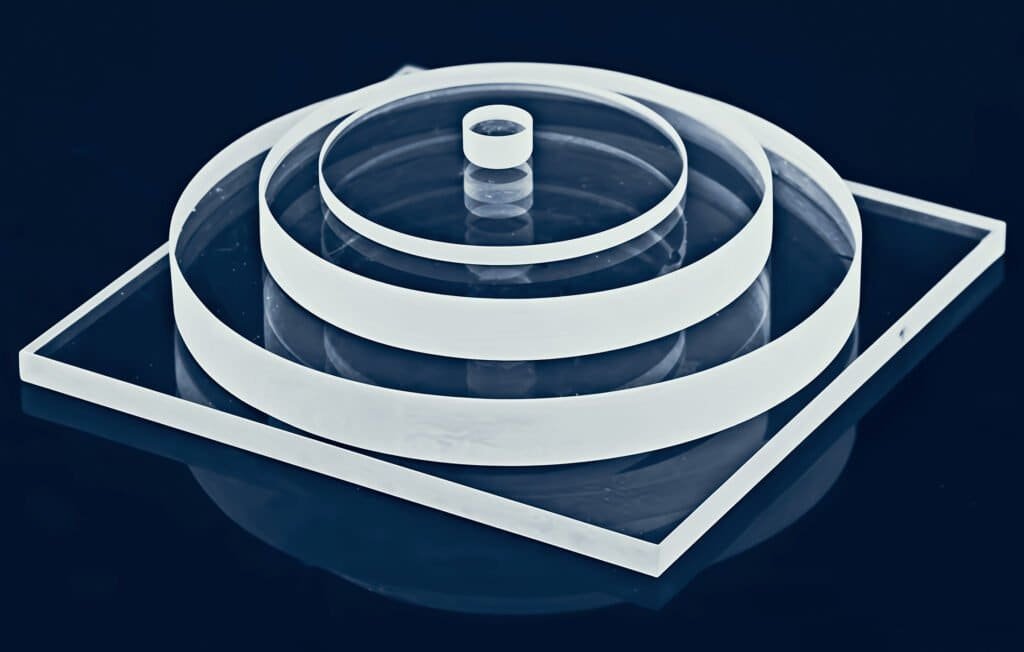
In systems such as infrared thermal imaging, laser ranging and missile early warning, there is a component that is often overlooked but is of vital importance—the optical window. It functions as a transparent barrier, allowing specific wavelengths of infrared light to pass through efficiently while protecting the internal precision components from the external environment. However, a variety of common optical materials frequently encounter challenges when exposed to wind, sand, high temperatures and chemical corrosion. Sapphire has emerged as one of the solutions to these problems.
- Excellent transmission over a wide wavelength range
The material properties inherent to sapphire ensure its unique status in the field of infrared optics. It performs well in the visible light wavelength range and also has high transmittance in the near-infrared to mid-infrared range (approximately 0.3 micrometers to 5 micrometers). It is therefore possible for a set of device using sapphire windows to simultaneously achieve visible light observation and infrared detection without the need to set separate windows for different wavelengths. This feature simplifies the design and enhances reliability for photoelectric systems that need to operate around the clock and in multiple modes.
- High hardness and durability
In the practical application of infrared windows, the greatest threat often comes from physical damage in the external environment. Scratches can be caused by a number of factors, including wind and sand erosion, scouring by rain, and even accidental wiping. These occur on the surface of ordinary glass or germanium windows. The distribution of light is affected by these scratches, which can result in blurred imaging and signal attenuation. Sapphire has a Mohs hardness of 9, second only to diamond, meaning it is highly resistant to scratching. In harsh environments such as the wild, deserts, and at sea, sapphire windows have been shown to maintain a smooth surface over time, reducing maintenance requirements and extending the service life of equipment.
- Thermal stability ensures performance in extreme environments
Infrared detection technology is required to function reliably in environments where there are significant temperature variations. Sapphire has a melting point of approximately 2040 degrees Celsius and excellent thermal conductivity, enabling it to withstand drastic temperature changes without cracking. In contrast, many other infrared window materials are prone to cracking or optical performance degradation under thermal shock. Therefore, in the aerospace industry, sapphire is often the only reliable choice for high-speed aircraft and monitoring systems in contact with high-temperature engines.
- Chemical inertness ensures long-term stability
Additionally, the chemical inertness of sapphire contributes to its durability. Sapphire is highly resistant to salt spray in marine environments, air pollutants in industrial zones, and even chemical reagents on the battlefield. This ensures that its transparency remains unaltered due to corrosion, and its optical properties are not affected by oxidation. This stability is particularly important for monitoring equipment that needs to be deployed for a long time and operates unattended.
Sapphire is not suitable for all infrared wavelengths, but within its effective working range, it has become an essential material in the field of infrared optical windows due to its hardness, thermal stability, corrosion resistance and wide wavelength transmission. For high-end optoelectronic equipment that requires long-term reliability, sapphire windows serve not only as protective layers but also as the core guarantee for the stable operation of the system.
