
Sapphire Windows – Eliminating Sensor Window Abrasion and Measurement Deviation
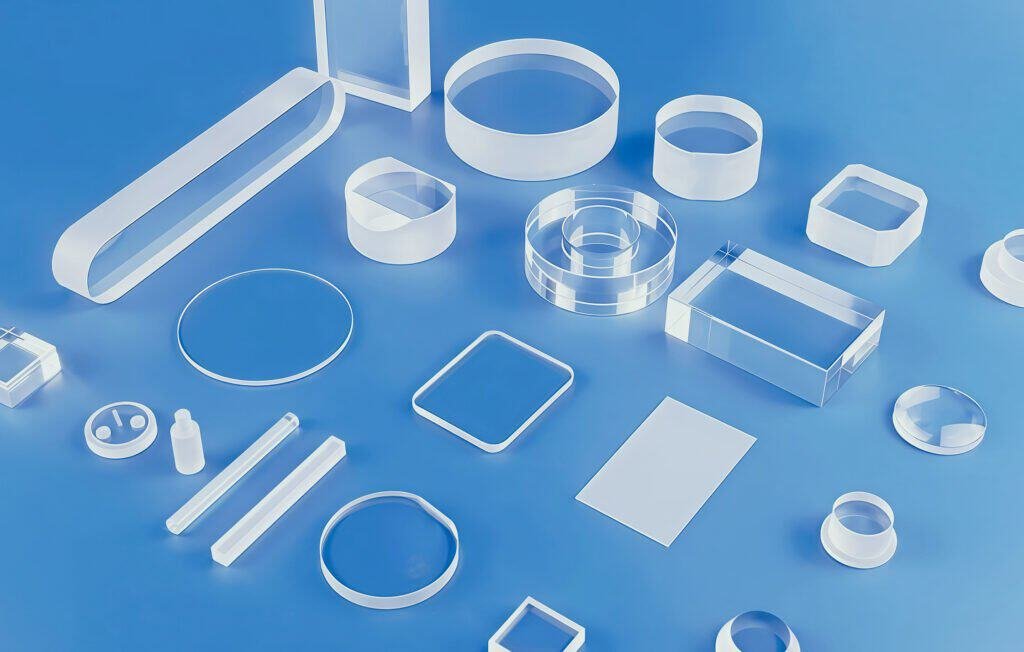
In the actual production settings, the use of ordinary glass in the construction of sensor windows in high-precision optical equipment can lead to window surface deterioration over time, including scratches, fogging and even cracking, when exposed to dust particles, chemical gases, high temperatures and humidity. These issues directly result in a reduction in light transmittance, unstable sensor signals, and, consequently, systematic deviations in measurement data. This article will focus on the sapphire glass window and systematically examine how it addresses the aforementioned abrasion and durability issues.
- Problem decomposition and cause analysis
In order to identify an effective solution, it is first necessary to understand the nature of the frequent failure of the sensor windows. The issues are primarily concentrated in three areas.
- Physical abrasionand tear
In situations involving high-speed airflow or mechanical movement, hard particles will repeatedly impact the surface of the window. Because the Mohs hardness of ordinary glass is only 5 to 6, its surface will quickly become scratched and will form a diffuse reflection layer, reducing the light transmittance.
- Environment corrosion
In many industrial scenarios, acidic or alkaline gases exist, and the surface of glass will be slowly eroded, leading to the degradation of optical performance.
- Temperature stress
If the sensor window undergoes a rapid temperature change from a high to room temperature, the difference in the thermal expansion coefficients between materials will result in internal stress and potentially lead to crack initiation.
From a materials science perspective, sapphire crystal (aluminium oxide) has a Mohs hardness of 9, placing it second only to diamonds in terms of hardness. Its resistance to chemical corrosion and thermal stability also far exceeds those of optical glass. Consequently, using sapphire glass windows to replace traditional glass is a fundamental solution to the above-mentioned problems.
- Core solution construction: From raw material selection to finished products
- Solve the core contradiction: Material upgrade and anti-abrasionability
The initial phase of the plan involves replacing the window material with optical-grade sapphire crystal, as opposed to the ordinary glass. Sapphire is characterized by its high hardness and strong chemical stability, making it highly resistant to particle scratches and gas corrosion. Through the precise processes of fine grinding and polishing, the surface roughness of sapphire glass can be consistently managed at the nanometer level, thereby ensuring minimal light scatter when passing through it.
- Optical performance optimization: Coating technology
The AR anti-reflection coating process has been implemented. Depositing multiple dielectric films on the surface of sapphire lenses has been shown to reduce reflectivity significantly, thus increasing transmittance to over 98%. This resolves the issue of weak signals caused by reflection loss in traditional windows, ensuring the stability of the sensor under low-light or long-distance working conditions.
- Structural adaptation and precision processing: Customized solutions
Many device windows are not standard circular in shape and may require square, stepped or irregular structures. Sapphire windows offer enhanced functionality for secondary processing such as precise cutting, drilling and slotting. This high precision ensures optimal adhesion of the window to the seal after installation, thereby reducing stress concentration caused by deformation and extending the service life of the entire optical module.
