
A Performance Comparison of Sapphire Glass With Other Optical Materials
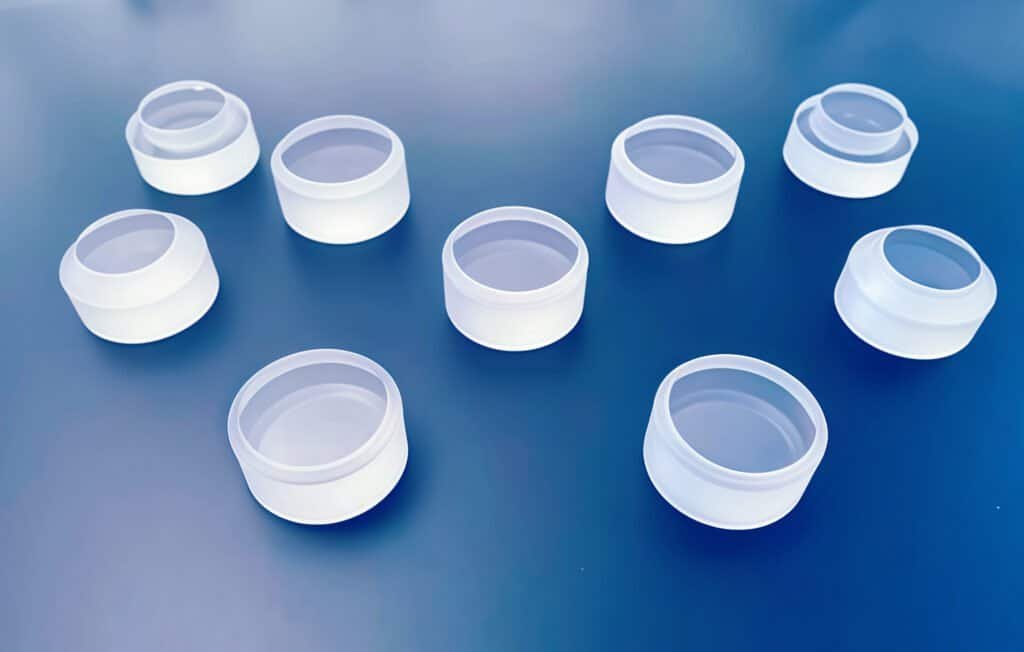
Sapphire glass, an artificially synthesized single-crystal alumina material, exhibits a distinctive and comprehensive performance among optical materials. However, in practical engineering applications, designers frequently encounter the need to select between sapphire glass, ordinary optical glass, quartz glass or resin lenses. Each material possesses unique and indispensable areas of strength. It is imperative to comprehend the variances in performance exhibited by these materials to achieve the most optimized utilization of each material.
- Hardness: Sapphireglass stands out from the rest materials
Sapphire glass is ranked as the second-hardest material on the Mohs hardness scale, with a rating of 9, placing it only behind diamond, which has a rating of 10. Ordinary optical glass typically exhibits a refractive index of 5 to 6, while quartz glass has a higher value of approximately 7. Resin lenses, on the other hand, generally have a lower refractive index of 2 to 3. In such environments, characterized by the presence of sand, dust and mineral debris, the wear-resistant life of sapphire glass can be hundreds of times that of ordinary glass. For instance, the observation window of wind power generation equipment will quickly become obscured by atomization in the presence of a sandstorm; however, sapphire glass is capable of withstanding these conditions and maintaining visibility for over five years.
- Optical transmittance: Each material has its good points
In the visible light wavelength range (400-700nm), the transmittance of ordinary optical glass can exceed 92% (after coating), which is comparable to that of sapphire glass. However, upon entering the infrared spectrum, significant disparities became evident. Notably, the transmittance of sapphire glass persisted above 85% within the mid-infrared range of 3-5μm, whereas that of ordinary glass exhibited a marked decline within the wavelengths above 2.5μm. Quartz glass demonstrates superior performance in the ultraviolet wavelengths (200-300nm), exhibiting a transmittance of up to 90%, in comparison to sapphire, which exhibits approximately 80% transmittance within this wavelength range. Consequently, quartz glass is the material of choice for ultraviolet optical systems, while sapphire glass is indispensable for infrared thermal imaging systems.
- Temperature endurance: Sapphire glassversus quartz glass
The softening temperature of quartz glass is approximately 1200℃, while the melting point of sapphire glass is as high as 2053℃. Each of these materials possesses distinct advantages within the domain of high-temperature applications. However, in scenarios involving extreme temperature differences, quartz glass exhibits a superior coefficient of thermal expansion compared to sapphire, and demonstrates enhanced thermal shock resistance. Nevertheless, in a continuous high-temperature radiation environment, the maximum permissible operating temperature for sapphire is 800 degrees higher than for quartz glass. Consequently, it is the preferred choice for steel smelting and gas turbine monitoring.
- Processing difficulty and design considerations
Sapphire glass is extremely hard, and its processing efficiency is only one-tenth of that of ordinary glass. Both drilling and cutting require diamond tools, and these are susceptible to micro-cracks, which can result in a relatively low yield rate.
Ordinary glass can enhance its strength through chemical tempering or physical strengthening, while sapphire glass achieves extremely high strength without any additional treatment. Sapphire glass can be 30% thinner than standard glass under the same impact resistance requirements, providing significant value in weight reduction applications in the aerospace and other industries.
While sapphire glass is not a universal material, it is particularly well-suited to extreme environments. Ordinary glass is a highly versatile and cost-effective material. Quartz glass is renowned for its superior performance in the domains of ultraviolet radiation and thermal shock resistance. Resin lenses are lightweight and highly malleable. Designers must consider various factors when selecting materials, including working temperature, wear resistance, optical wavelengths, and budget constraints.
