
Sapphire Windows vs Glass & Quartz | 5 Key Specs Compared
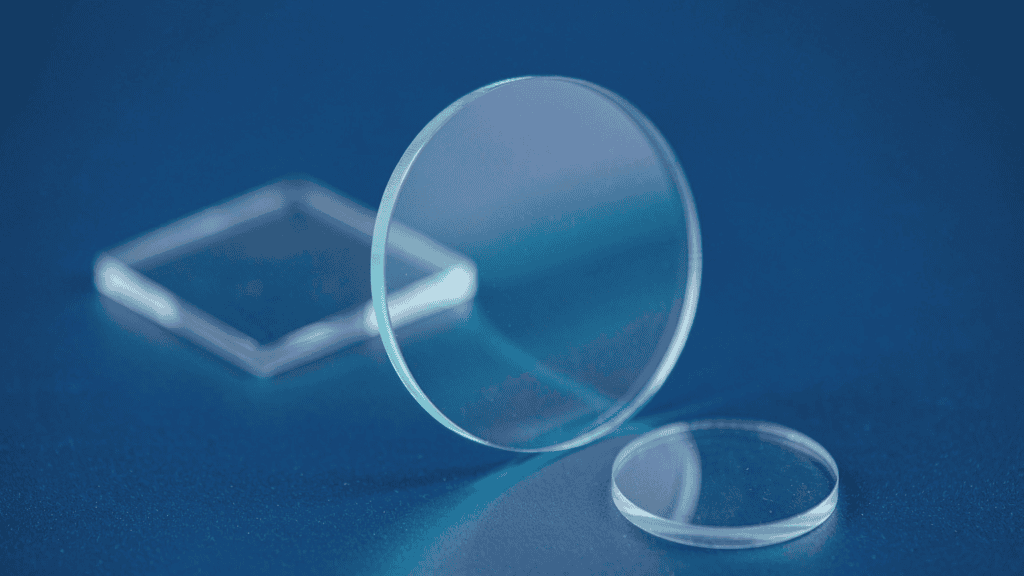
Optical windows are vital components in a variety of industrial and scientific research devices. These include high-pressure reactors, high-power laser systems, aerospace sensors and high-temperature optical measurement equipment. Optical windows are subjected not only to light testing, but also to temperature, pressure and chemical environment testing. The most common materials used for optical windows include conventional glass, quartz, sapphire, and high-end ceramics. Among these, sapphire windows are particularly noteworthy in a number of high-end applications due to their unique properties.
- Optical transmittance and available light transmitting wavelengths
Sapphire displays excellent optical transmittance across the ultraviolet to mid-infrared wavelengths, with exceptional stability in high-temperature environments. Conversely, general optical glass exhibits substandard light transmittance in the ultraviolet wavelength ranges, and its light transmittance experiences a substantial decline at high temperatures. While quartz glass displays superior ultraviolet transmittance in comparison to sapphire, it demonstrates slightly lower efficacy in the infrared ranges. Sapphire’s high light transmittance across a wide spectral range offers distinct advantages in laser, ultraviolet optical measurements and multi-wavelength sensors.
- Mechanical strength and pressure resistance
Sapphire is renowned for its extreme hardness, ranking second only to diamond, and its bending strength is also very impressive. In high-pressure environments, sapphire windows have proven to withstand stresses far greater than those of standard glass or quartz materials, significantly reducing the risk of breakage. Ordinary optical glass has relatively low compressive and bending resistance, and is prone to cracking under large-sized or high-pressure conditions. The strength of quartz falls between that of glass and sapphire, yet its strength diminishes more rapidly at high temperatures. In cases where systems must be able to withstand high pressure or high-temperature shock, sapphire is undoubtedly the more reliable option.
- High temperature resistance
Sapphire is characterized by its excellent heat resistance, which allows it to be used in environments with temperatures around 1000ºC for extended periods without undergoing structural changes. Ordinary glass is known to soften or deform at temperatures above 300°C. The high thermal conductivity of Sapphire can facilitate rapid heat dissipation, mitigates bending or stress concentration caused by thermal gradients, and ensures consistent optical performance.
- Chemical corrosion resistance
Sapphire displays exceptional chemical stability in strong acid, strong alkali or other corrosive gas environments. Ordinary optical glass is susceptible to chemical corrosion and may become cloudy or develop micro-cracks over time. While quartz demonstrates excellent chemical stability, it is susceptible to damage from strong alkalis or high-temperature steam. The chemical inertness of sapphire ensures the window remains clean and transparent for a long time, which is particularly important for high-pressure reactors, corrosive gases and chemical experiment systems.
- Size and processing limitations
Sapphire is a challenging material to process due to its high processing costs. For large-diameter or non-standard shaped windows, the cutting and polishing processes are complex and require professional equipment. Conversely, ordinary glass is a versatile material that is easy to process and inexpensive, making it well-suited for low-pressure and low-temperature applications. Sapphire is the most cost-effective solution for critical windows in extreme environments, as reliability and safety are of paramount importance.
Sapphire windows are specifically designed for use in high-pressure, high-temperature and highly corrosive environments. Its main limitations lie in processing costs and the difficulty of manufacturing large-sized windows, but in critical applications, these costs are usually worthwhile. When selecting optical window materials, engineers must conduct a thorough assessment, considering factors such as pressure, temperature, transmission wavelengths, and the anticipated long-term usage environment.
