
Beyond Price – Key Factors When Choosing Sapphire Glass
- Why is sapphire glass the preferred choice for high-end applications?
In scenarios where high strength, high light transmittance and resistance to extreme environments are essential, sapphire glass is almost an irreplaceable choice. Its Mohs hardness is second only to that of diamond, and its scratch resistance is more than three times that of standard glass. This makes it the preferred material for use in precision instruments, windows, optical lenses and special display screens.
- How do the key properties of sapphire glass affect practical applications?
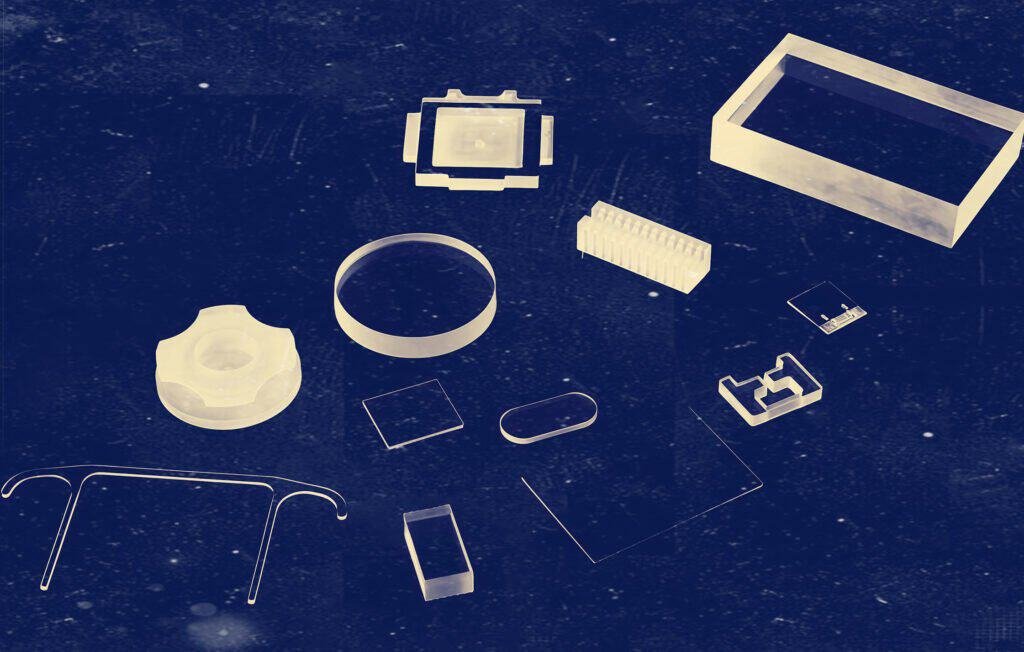
In practice, purchasers frequently underestimate the impact of thermal stress on materials. Ordinary glass is prone to cracking under rapid temperature changes, while sapphire glass has an extremely low coefficient of thermal expansion, making it an ideal choice for high-temperature observation windows.
Sapphire glass hot bending technology is an excellent solution for applications that require curved surface design, as it overcomes the limitations of traditional processing methods. This process can achieve precise curved surface structures, such as those required for mobile phone camera protective films, while maintaining the material properties. However, it should be noted that hot bending processing will slightly reduce the edge strength. When designing, it is essential to reserve an appropriate safety margin.
- How to balance the selection factors of sapphire glass in different application scenarios?
- Precision instrument window
Give priority to the uniformity of light transmission of quartz glass or sapphire, and it is advisable to control the thickness within 0.5 to 1.2mm.
- Industrial wear-resistant components
Select sapphire glass with a thickness of ≥3mm and, if necessary, perform double-sided polishing treatment.
- What professional equipment is needed for sapphire glass processing?
The procurement of raw materials represents merely the initial phase of the process; the true challenge lies in the subsequent processing stages.
- Precision processing equipment
Sapphire glass polishers can achieve excellent surface roughness.
- Special cutting system
Ultrasonic or laser equipment can avoid microcracks caused by traditional processing.
- What details should be noted when using sapphire glass in daily life?
- Transportation protection
Cover the optical surface with sapphire glass protective film to prevent scratches from sand and gravel.
- Cleaning method
Do not use cleaning agents containing hydrofluoric acid. It is recommended to wipe with ultrapure water and a lint-free cloth.
- Edge processing
It is important to note that unpolished cutting edges should not be subjected to direct force.
The key to purchasing sapphire glass is to consider the total life cycle cost, rather than just the unit price. From the corrosion resistance of the sapphire glass substrate to the processing accuracy of the sapphire glass polishing machine, each link impacts the final value.
