
The Application of Anti-reflection Coatings in the Field of Optical Lenses
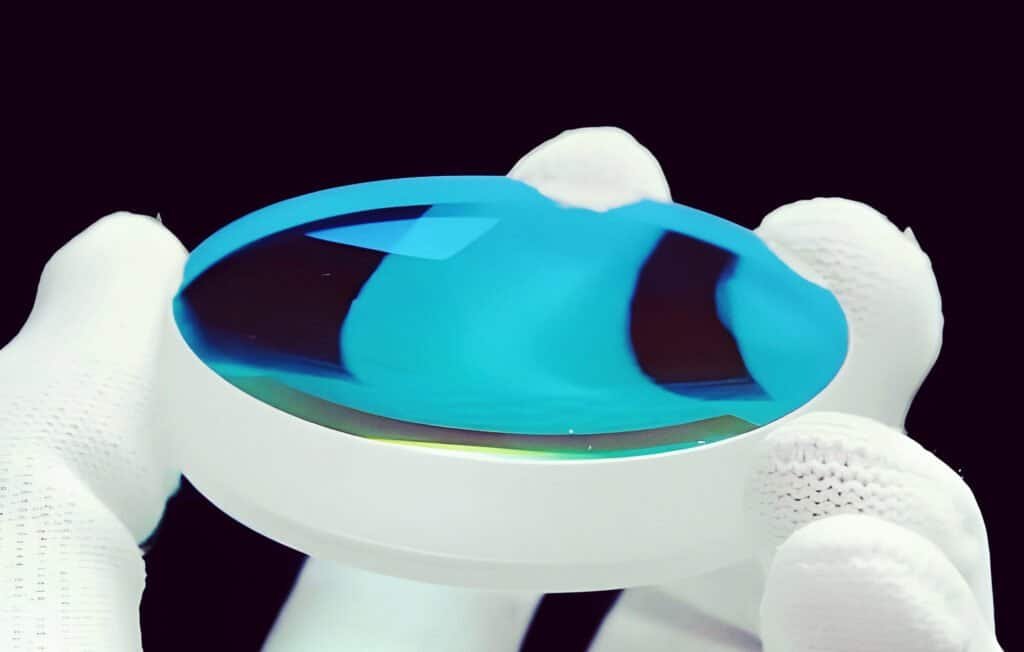
In optical components, a certain amount of light energy is inevitably lost due to the reflection effect on the component surface. In order to minimize reflection loss on the component surface, it is common practice to apply a transparent dielectric film to the optical component. This film is known as an anti-reflection film.
When light enters different transmitting substances (such as from air into glass), approximately 5% is reflected. In the field of optical sights, there is a wide range of lenses and refracting lenses available, and the total loss of incident light can reach 30% to 40%. Modern optical lenses are usually coated with a single or multiple layers of magnesium fluoride anti-reflection coatings. A single layer of anti-reflection coating can reduce reflection to 1.5%, while multiple layers can lower reflection to 0.25%. Therefore, if the entire surface is properly coated, the light transmission rate can be expected to reach 95%. Lenses coated with a single layer of anti-reflection film typically exhibit a blue-purple or red hue, while those coated with multiple layers of anti-reflection film tend to display a light green or dark purple tint.
For instance, consider a 35mm auto-zoom camera composed of 18 lenses. Assuming a 4% reflection rate for each interface between the glass and the air, the light transmittance of a lens without anti-reflection is 27%, the light transmittance of a lens coated with one layer of film is 66%, and the light transmittance of a lens coated with multiple layers of film is 85%. In the domain of optical systems, the coating applied to the lens represents a pivotal component, given its critical function in mitigating reflection. Anti-reflection coatings are an essential component in a variety of professional contexts, where they are instrumental in meeting the specific requirements of each application.
The essence of the anti-reflection coating in increasing the intensity of transmitted light is that the light wave, as an electromagnetic wave, changes its energy distribution at the interface of different media during its propagation due to the different boundary conditions. In the case of single-layer films, all the incident light can only pass through the medium when the media on both sides of the anti-reflection film are different. Single-layer films only enhance the transmittance of electromagnetic waves of a specific wavelength. To achieve transmission enhancement over a wider range of wavelengths, multi-layer films are used for coating.
Significant experience has been gained in the application of anti-reflection coatings, leading to the discovery of numerous materials suitable for use as anti-reflection coatings. At the same time, it has also mastered numerous advanced coating technologies. The application of anti-reflection coatings is relevant to a variety of industries, including medicine, military, and space exploration, and these coatings make significant contributions to the progress of human science and technology.
