
Aspheric Lenses and Their Roles in Optical System Design
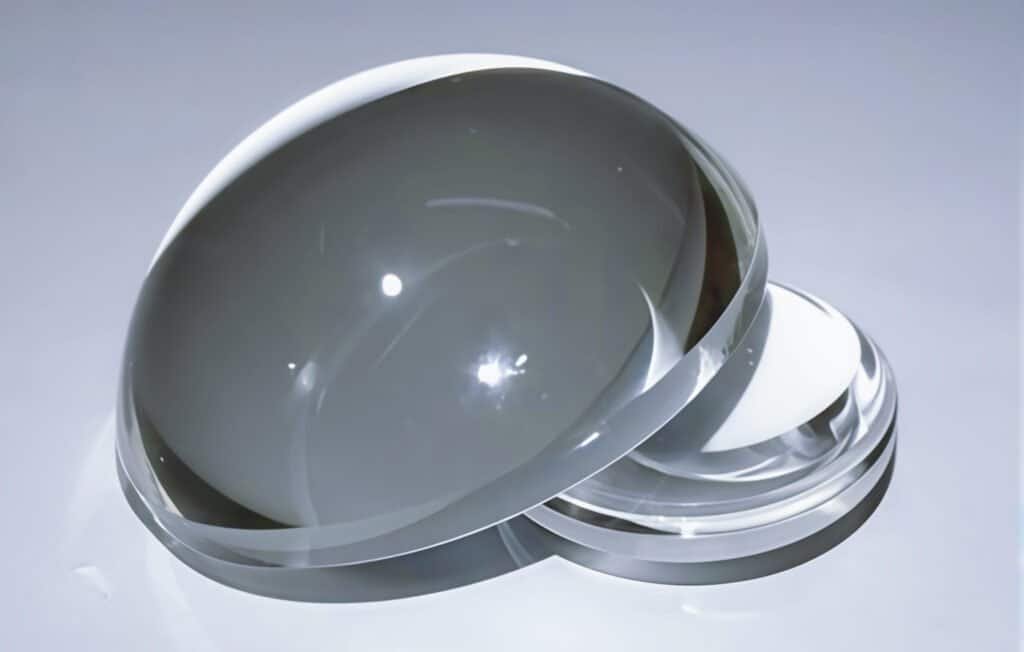
Aspheric lenses are of particular importance in the design and application of optical systems, due to their ability to correct multiple aberrations on a single surface. This makes them key components in many optical systems that have strict requirements for imaging accuracy, light energy utilization rate or structural compactness.
- Imaging optical systems
In imaging systems with strict quality requirements and volume limitations, the adaptability of aspheric lenses is especially evident. The introduction of aspheric lenses for photography, film and television has enabled the enhancement of imaging quality without the need for additional lenses. This innovation ensures high-resolution images from centre to edge.
Medical endoscopy and surgical microscopes must transmit clear images in confined spaces while minimizing the number of lenses to reduce loss and aberration accumulation during the optical path. Aspheric lenses boast high aberration correction capabilities, enabling high resolution and wide field of view in a shorter optical path. This helps doctors to obtain detailed images under minimally invasive conditions, improving the accuracy of diagnosis and surgery.
- Projection and display system
Projection and display systems must prioritize both clarity of image and efficient utilization of light source energy, ensuring its even distribution across the imaging surface. Aspheric projection lenses are designed to correct spherical aberration and coma of large-angle light rays on a single surface, thus ensuring a more uniform energy distribution of the light spot. This, in turn, enhances the overall brightness and contrast of the projected image, while also reducing the number of required lens element, thereby shortening the projection optical path and reducing the overall volume of the optical system.
- Laser and optical communication
Laser systems have extremely high requirements for wavefront quality and spot shape. Any deviation from the standard parameters will have a detrimental effect on the beam divergence angles, focal light intensity or mode distortion. In laser processing and cutting systems, aspheric lenses are utilized to focus the laser beam with great precision, resulting in a significantly smaller spot size. This enhances both energy density and processing accuracy. Its aberration correction capability ensures the stability of the focus position, reducing the diffusion of the heat-affected zone and enhancing the neatness and repeatability of the processed edge.
- Spectroscopy and precision measurement
The use of spectrometers, interferometers and precision measuring instruments necessitates the implementation of optical systems to ensure the maintenance of consistent imaging positions and proportions at varying wavelengths. This is essential for the control of chromatic and monochromatic aberration. In imaging spectrometers, aspheric lenses cannot directly eliminate material dispersion, but they can optimize monochromatic aberration to make the aberration trends at different wavelengths consistent, thereby reducing the slope of the overall aberration curve. The combination of low-dispersion materials and aspherical lenses allows for more compact achromatic designs that enhance the wavelength coverage range and imaging quality of the spectrometer.
The application scope of aspheric lenses is extensive, with their use being appropriate for all optical systems that have high requirements for aberration control, light energy utilization, compact structure or environmental adaptability. The optical systems market is moving towards high performance and miniaturization. Consequently, aspheric lenses are evolving from “luxury items” in high-end applications to “necessities” in broader fields. This development is continuously expanding the boundaries of human observation and utilization of light.
