
Can Optical Prisms Enhance Camera Image Quality?
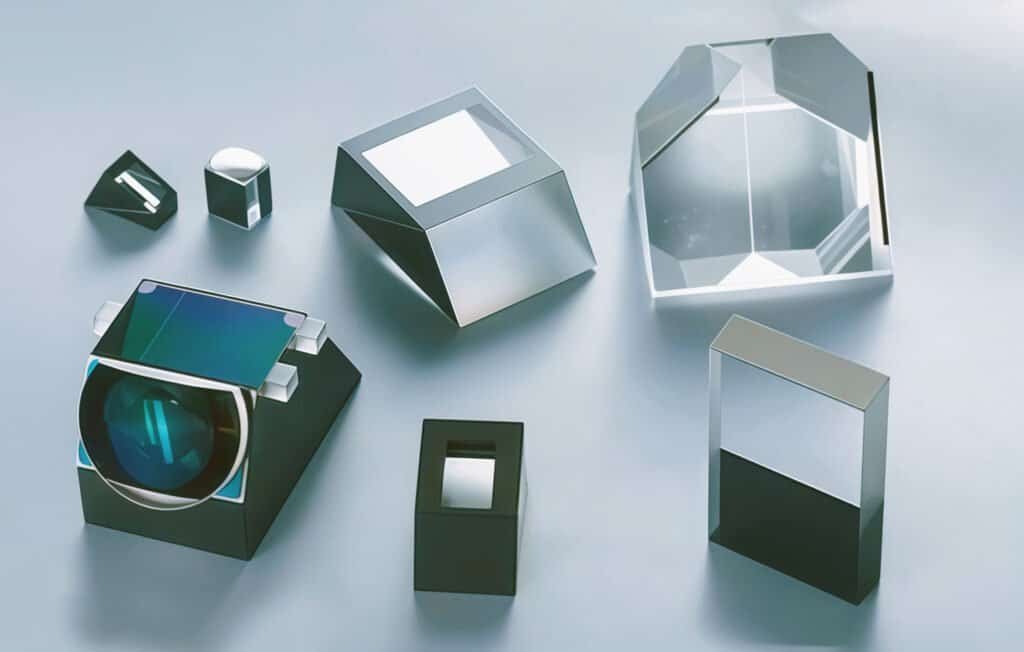
In a camera imaging system, the performance of optical components directly determines the clarity, colour reproduction and detail expressiveness of the image. The optical prism is a core component of optical instruments, serving to alter the direction of light propagation through the process of refraction and reflection. This indispensable element has played an irreplaceable role since the inception of the camera. Optical prisms have been shown to contribute to the enhancement of camera imaging quality through the optimization of optical path design, the rectification of optical deviations, and the augmentation of functional scenarios.
- The core applications of optical prisms in cameras
Optical path steering represents a foundational application of optical prisms, chiefly addressing the issue of optical path coordination between camera framing and imaging. In conventional single-lens reflex cameras, the pentaprism constitutes a fundamental component. When light passes through the lens and enters the camera, it first projects onto the mirror. The mirror reflects the light to the pentaprism. The pentaprism, a component of the optical apparatus, facilitates the alteration of the direction of the light path through a series of four total reflections. This process effectively converts the horizontally propagating light to a vertical direction, thereby projecting it into the viewfinder. In comparison with the early pentamirrors, pentaprisms are composed of a one-piece formed glass material, which possesses a higher reflection efficiency and stronger optical path stability.
Optical path distribution represents the fundamental requirement of multi-camera systems and professional imaging equipment. The utilization of a single optical path across multiple dimensions is facilitated by the spectral separation effect of prisms. In contemporary multi-camera systems employed in smartphones, the utilization of beam-splitting prisms has become a pervasive practice. Upon the occurrence of light entering the lens, the prism functions to divide it into two beams. One beam is utilized for the primary lens to form an image and obtain a high-definition picture, while the other beam is guided to the secondary lens (e.g. a depth-of-field lens or macro lens) to obtain scene depth information or detail data.
Dispersion correction is a key application for high-end cameras, with the purpose of enhancing image quality. This is achieved by offsetting the dispersion deviation of the lens through a special prism structure. In the event of a camera lens refracting light, light of varying wavelengths will undergo a deviation in their propagation path due to the disparate refractive indices. This phenomenon is referred to as chromatic aberration, and it can manifest as purple and green edges along the periphery of the image. An achromatic prism, composed of two glass prisms with different refractive indices, precisely calculates the refractive index difference between the two glasses. This causes light of different wavelengths to reconverge at a single point after passing through the prism, thereby effectively canceling out the chromatic aberration of the lens.
- The core mechanism by which optical prisms enhance the imaging quality of cameras
- Enhance the utilization rate of light and optimize the brightness and purity of the picture
The light utilization rate is a fundamental factor affecting imaging quality. It is evident that the minimization of light loss directly correlates with the enhancement of the signal-to-noise ratio of the image sensor, leading to an increased ability to discern dark details. Optical prisms have been shown to significantly reduce light loss in the optical path through the efficient reflection and refraction of light. A comparison with the conventional combination of mirrors and lenses reveals the significant advantages of this new system.
- Correct optical deviations to enhance picture clarity and color accuracy
Optical deviation represents the primary issue with regard to imaging quality, and it encompasses chromatic aberration, distortion, and aberration, among others. Such deviations can result in the blurring of image edges, the distortion of colour, and the loss of image detail. Precise structural design and material selection allows optical prisms to make specific corrections to these deviations, enhancing the image quality.
- Optimize the optical path design to expand the imaging function and scene adaptability
The enhancement of imaging quality is evident not only in the precision of the image itself, but also in the adaptability of the cameras to diverse scenes and their functional expandability. Optical prisms, through the implementation of a flexible optical path design, facilitate the augmentation of the imaging functionality of cameras without compromising image-quality, thereby enhancing the practical value and competitive performance of cameras.
- Conclusion
Optical prisms, constituting the core component of a camera’s imaging system, perform a comprehensive and fundamental function in enhancing imaging quality. Optical prisms have been demonstrated to resolve numerous core issues pertaining to the imaging process of cameras. This has been achieved through precise regulation of the light propagation path, encompassing aspects such as the optical path, framing accuracy, dispersion correction to optimize image quality, and optical path distribution to expand functional scenarios.
