Description
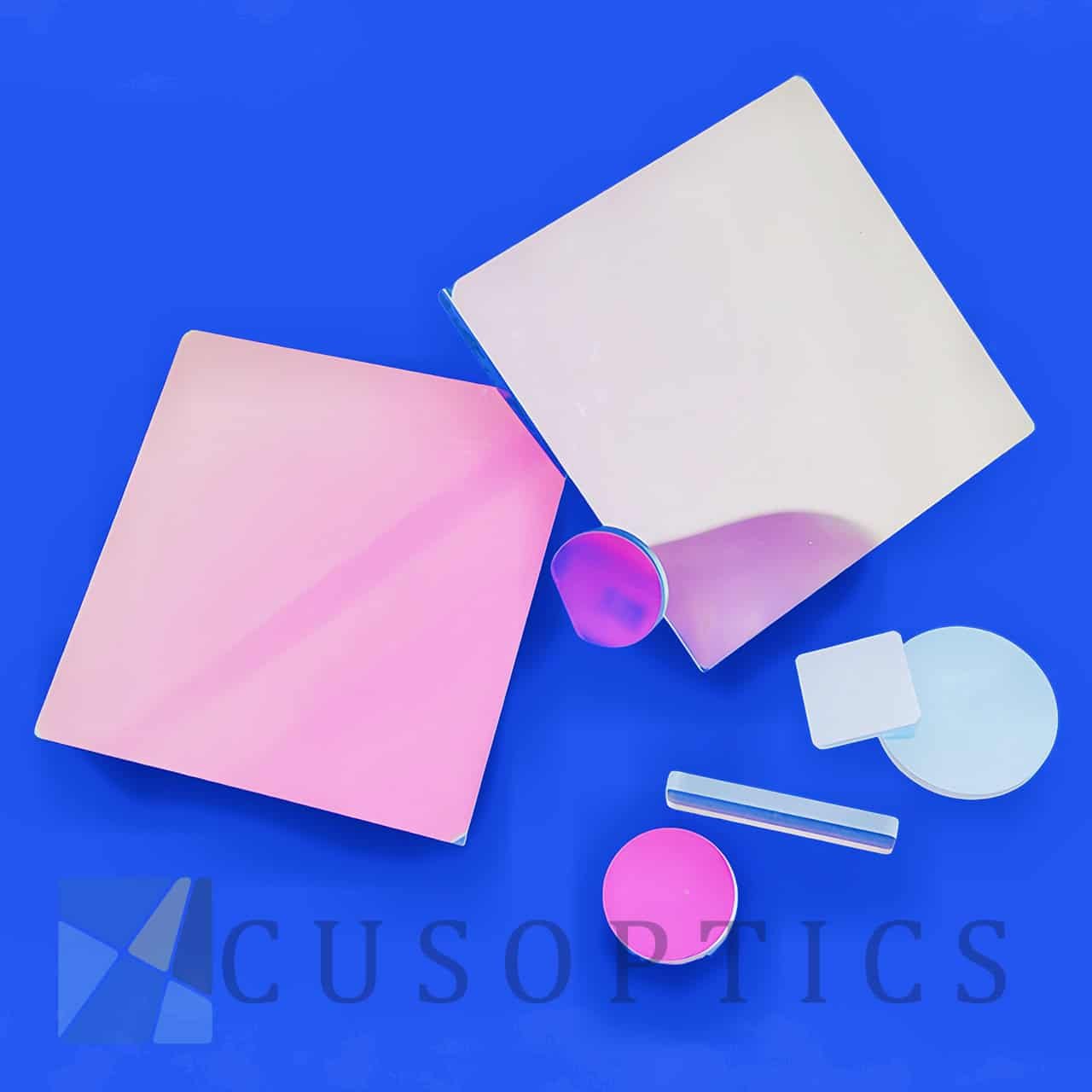
Filter coating is a critical technology in optics that enables selective transmission or blocking of specific wavelengths of light. Customized filter coatings are tailored to meet unique application requirements, ensuring optimal performance in fields such as biomedical imaging, aerospace, telecommunications, and industrial laser systems.
The process begins with a detailed analysis of the client’s needs, including target wavelength ranges, transmission efficiency, environmental durability, and substrate compatibility. Using advanced thin-film deposition techniques like ion beam sputtering (IBS) or electron beam evaporation, multilayer coatings are precisely engineered to achieve desired spectral characteristics. For example, bandpass filters can be designed to isolate narrow wavelength bands, while longpass or shortpass filters selectively transmit or block broader spectral regions.
Customization also addresses challenges such as angular sensitivity, temperature stability, and resistance to harsh conditions (e.g., humidity, UV exposure). Coatings are applied to substrates like glass, quartz, or sapphire, ensuring compatibility with the intended optical system. Quality control involves rigorous testing using spectrophotometry and environmental stress tests to guarantee performance consistency.
Whether for fluorescence microscopy, hyperspectral imaging, or laser protection, customized filter coatings enhance signal-to-noise ratio, improve system efficiency, and enable groundbreaking innovations. By collaborating with clients, we deliver solutions that push the boundaries of optical performance and reliability.
Optical Glass Coatings and Their Features
1. Anti-Reflective Coating (AR)
Minimizes light loss and eliminates ghosting by reducing surface reflections. Features include >99.5% transmission at target wavelengths, broadband performance across UV to IR spectra, and excellent durability against abrasion and environmental factors. Essential for lenses and displays.
2. High-Reflective Coating (HR)
Achieves extreme reflectivity (>99.9%) through dielectric layer stacks. Offers negligible absorption/scatter, high laser damage threshold, and precise wavelength specificity. Critical for laser cavities and mirror applications.
3. Beamsplitter Coating
Divides light into reflected/transmitted components with precise ratios (e.g., 50/50). Provides polarization-sensitive or wavelength-specific splitting. Used in interferometry and imaging systems.
4. Bandpass Filter Coating
Transmits narrow wavelength bands while blocking others. Features sharp cut-on/off edges, high out-of-band rejection (OD4+), and stable performance at various angles. Ideal for spectral analysis.
5. Metal Mirror Coating (Aluminum/Protected Aluminum)
Provides broad-spectrum reflection from UV to IR. Aluminum coatings offer ~90% reflectivity, while protected versions add durability through oxide overlayers. Cost-effective for general purpose use.
These coatings enable advanced control over light propagation, reflection, and spectral selection in optical systems, with specific formulations optimized for laser, imaging, or analytical applications.