
The Role of Aspheric Lens Lightweighting in System Weight Reduction and Assembly Facilitation
In modern optical systems, the weight and complexity of lens components, along with the assembly process, are frequently pivotal factors influencing the overall performance and cost efficiency of the entire system. Aspheric lenses have a range of applications in fields such as imaging, laser transmission and precision measurement, due to their ability to correct aberration and reduce the number of components. The core of lightweight design is to achieve a dual reduction in weight and assembly of aspheric lenses through geometric optimization, material selection and manufacturing process coordination, while maintaining optical performance and structural reliability.
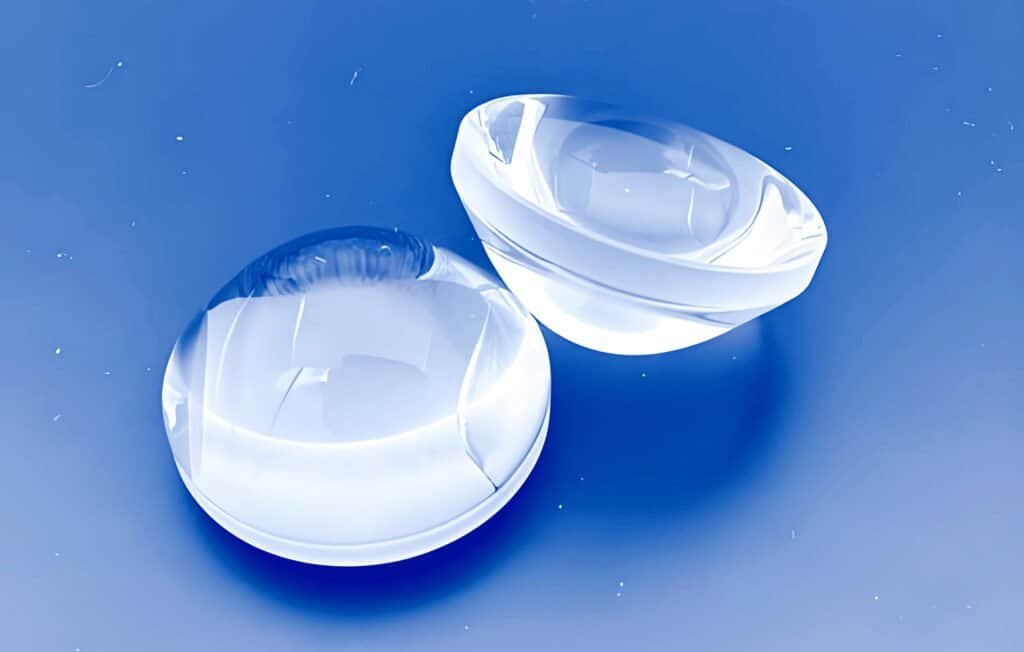
As opposed to spherical lenses, aspheric lenses possess continuously changing surface curvatures and are capable of correcting multiple aberrations with a single lens surface. Consequently, in the field of optical design, they frequently achieve the desired imaging tasks with a reduced number of lenses. The lightweight design is further enhanced by the removal of redundant materials in the non-load-bearing area, ensuring a structure that focuses on the effective optical and necessary structural support areas.
Material selection is a pivotal aspect of lightweight design. Traditional optical glass has a relatively high density. While its optical performance is stable, its application is limited in situations where weight is a critical factor. Lightweight design can introduce low-density special optical materials, such as certain types of optical plastics, microcrystalline glass or composite materials, which can significantly reduce the mass per unit volume while maintaining the required refractive index and dispersion characteristics. When selecting materials, it is also necessary to take into account their compatibility with the subsequent processing techniques to ensure that the lightweight form can be reliably replicated and mass-produced.
There is a close intrinsic connection between lightweighting and the reduction of assembly difficulty. In traditional multi-lens systems, the addition of each lens necessitates the incorporation of a lens tube positioning surface, pressure ring, or adhesive fixation structure. The lightweight design of aspheric lenses often involves integrating the overall optical solution: as a single aspheric can replace the functions of two or even more spherical lenses, the total number of lenses in the system is reduced, and the mechanical support parts and adjustment mechanisms that go with it are also simplified accordingly.
From a system standpoint, the incorporation of lightweight aspheric lenses contributes to enhanced thermal and mechanical stability, ultimately reducing assembly complexity. The reduction in mass leads to a reduction in system inertia when starting, stopping, or being subjected to external vibration and shock. Additionally, the heat capacity of the lens and the supporting structure is also reduced, which helps to shorten the stabilization waiting time after assembly. Meanwhile, due to the light weight of the lens itself, the clamping force required by the fixed structure is reduced, and the mechanical stress level introduced during assembly drops. This further reduces the need for later maintenance and adjustment, thereby lowering the overall difficulty for the assembly and maintenance teams.
Lightweight design must also adhere to the principle that optical performance is uncompromising. The surface shape accuracy of aspheric surfaces directly determines the effect of aberration correction. The introduction of weight-reducing structures must not compromise the stiffness and thermal stability of key areas. During the design process, finite element analysis is required to evaluate the deformation of different lightweight schemes under gravity, thermal gradient and assembly load. This ensures that wave aberration and focal length variation are controlled within the allowable range.
In general, the lightweight design of aspheric lenses has achieved a significant reduction in system weight through geometric optimization to remove redundant mass, the substitution of low-density materials, rational planning of structural stiffness and force transmission paths, as well as collaborative innovation in processing and assembly techniques. Concurrently, the reduction in the number of lenses, the simplification of the supporting structure, and the decline in stress levels have led to a simultaneous decrease in the steps, precision requirements, and risks in the assembly process, effectively alleviating the assembly difficulty.
