
Is quartz glass or sapphire glass preferred for camera lens?
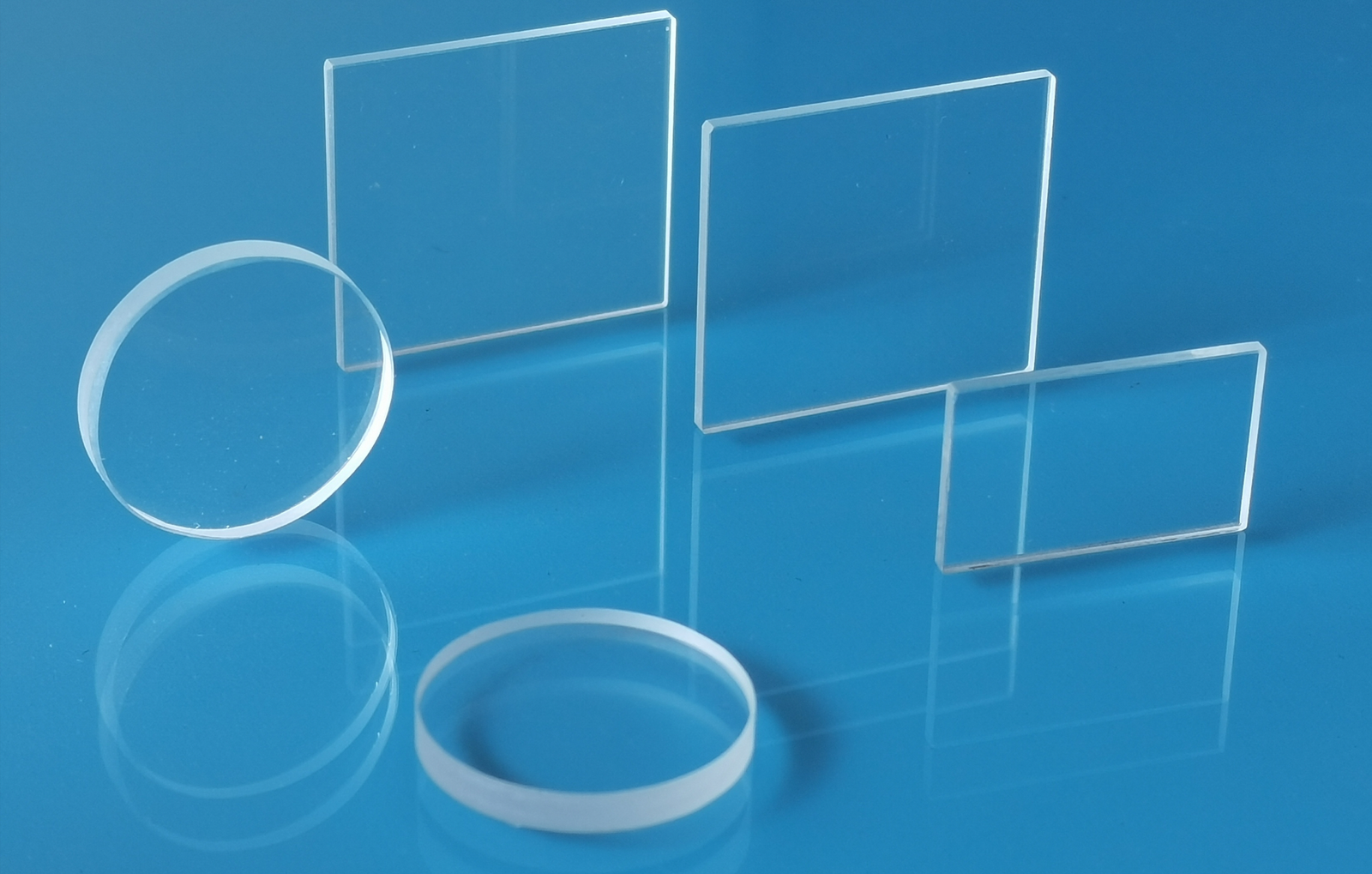 When choosing camera lens glass, quartz glass and sapphire glass have their own advantages and disadvantages, which need to be balanced according to specific needs. The following are key comparisons and suggestions:
1. Optical performance
Quartz piece (fused silica)
Advantages: Wide transmission range (UV to near-infrared), good optical uniformity, low dispersion, suitable for precision optical systems.
Disadvantages: Low refractive index (about 1.46), which may require more lens groups to correct aberrations.
Sapphire slice
Advantages: extremely high hardness (Mohs 9, second only to diamond), strong scratch resistance; The refractive index is relatively high (about 1.76), which can reduce the number of lenses.
Disadvantages: The light transmission range is relatively narrow (mainly covering visible light to mid infrared), and the transparency in the ultraviolet band is not as good as quartz; There may be birefringence phenomenon, which affects the imaging quality.
2. Durability
Sapphire film: significantly better than quartz, scratch resistant, dust resistant, suitable for harsh environments such as outdoor sports cameras and industrial applications.
Quartz wafer: has lower hardness (Mohs 7) and requires coating protection, but its impact resistance may be slightly better than sapphire (which has higher brittleness).
3. Cost
Sapphire film: expensive (with high raw material and processing costs), commonly used for high-end or special purpose lenses.
Quartz chip: relatively low cost, suitable for mass consumer products.
4. Suggestions for application scenarios
Choose sapphire flakes:
Need for ultimate durability (such as sports cameras, phone lens covers, military equipment).
There are requirements for refractive index and sufficient budget.
Select quartz plate:
Wide spectral transparency is required (such as in scientific research, ultraviolet or infrared photography).
Pursuing high optical uniformity and being cost sensitive.
Ordinary consumer grade cameras (most lenses still use optical glass+coating solution).
5. Other considerations
Coating technology: Modern lenses often rely on coating to improve performance (such as anti reflection and waterproofing), which can partially compensate for material shortcomings.
Weight: Sapphire has a higher density, which may increase the weight of the lens.
Alternative solution: Most camera lenses use optical glass (such as Schott series) to balance cost and performance, and quartz/sapphire is only selected for special needs.
Conclusion:
Prioritize durability/scratch resistance → Choose sapphire.
Prioritize optical performance/wide spectrum → choose quartz.
Conventional use → Optical glass (non quartz/sapphire) is still mainstream.
