
Analysis of the Physical Properties and Application Scenarios of K9 Glass
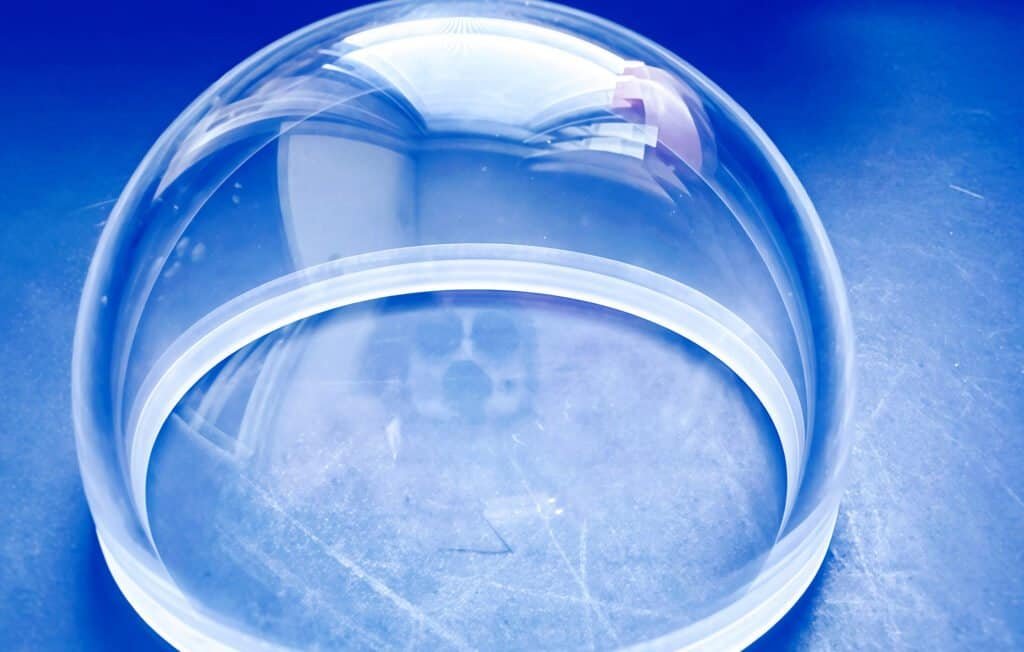
- The basic definition and classification of K9 glass
K9 glass belongs to the category of borosilicate glass and is manufactured through a specific process. Its refractive index is determined to be 1.516, and its Abbe number is calculated to be 64.2. This variety of optical glass is characterized by a uniform transmission curve within the visible light wavelength, and is designated as a standard optical glass material in the Chinese national standard GB/T 9037.
- Analysis of core physical properties
(1) Light transmittance
It has been determined that the light transmittance of K9 glass exceeds 92% within the wavelength range of 400-700 nm, and no obvious dispersion phenomenon is present.
- Chemical inertness
K9 glass is capable of withstanding both acidic and alkaline environments, with a pH range of 1 to 14. Furthermore, it has been tested for 1000 hours at 85°C/85% RH and has proven to be uncorroded.
- Mechanical parameter
K9 glass possesses a Mohs hardness of 6.5, an elastic modulus of 72 GPa and a thermal expansion coefficient of 7.2 × 10⁻⁶/°C.
- Typical application scenarios
(1) Astronomical observation system
The surface shape accuracy of K9 glass must reach λ/20 or above in terms of its use as the primary mirror material in a reflecting telescope.
- Biological microscopic technology
The utilization of K9 glass in the fabrication of oil immersion and objective lenses is contingent upon its incorporation with fluorite lenses, a necessity arising from the need to rectify chromatic aberration.
- Precision optical measurement
K9 glass is utilized as a reference optical element in the standard lens group of an interferometer.
- Comparative evaluation with similar materials
In comparison with BK7 glass, the light transmittance of K9 glass in the ultraviolet wavelength is increased by 15%. A cost analysis reveals that K9 glass is 40% more economical than fused quartz glass, but its thermal stability is marginally lower. In comparison with optical plastics, the material exhibits a refractive index temperature coefficient of 3×10⁻⁶/℃, rendering it more suitable for use in environments requiring high precision.
- Key points of quality identification
- Spectrum detection
The refractive index tolerance of K9 glass at a wavelength of 546.1 nm was verified using a spectrophotometer, with a result of ≤ ±0.001.
- Stress test
Polarized light detection should meet the stress standard of Class 1.
- Certificate verification
The optical homogeneity test report in compliance with the ISO 12123 standard needs to be provided.
