
The Application Advantages of Sapphire Optical Components in High-frequency and High-power Environments
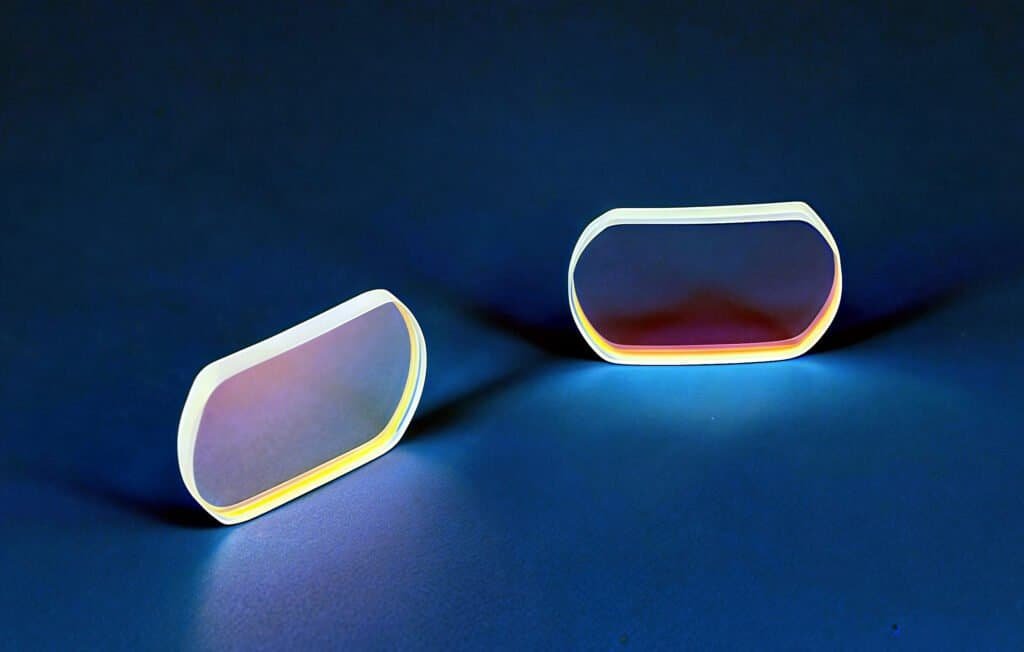
In high-frequency and high-power working environments, the high thermal conductivity and low coefficient of thermal expansion of sapphire ensure the stability and lifespan of sapphire optical components. This characteristic renders sapphire a vital material in numerous high-tech application fields. From laser technology to aerospace, from high-power microwave devices to precision optical instruments, sapphire, with its unique physical and chemical properties, demonstrates extraordinary performance under these harsh conditions. The present article will examine the application advantages of sapphire optical components in high-frequency and high-power environments, as well as the manner in which their high thermal conductivity and low coefficient of thermal expansion enhance their stability and lifespan.
Firstly, it is imperative to comprehend the fundamental properties of sapphire. Sapphire, with the chemical composition of aluminium oxide (Al₂O₃), is a mineral whose hardness is second only to that of diamond. Sapphire glass demonstrates a high light transmittance, exhibiting excellent transmittance in the range extending from ultraviolet light to visible light and extending to near-infrared light. Of particular significance is the fact that the thermal conductivity of sapphire glass is considerably higher than that of many other optical materials. This property enables it to conduct heat more effectively, thereby preventing performance degradation or damage caused by local overheating. Furthermore, sapphire glass exhibits an exceptionally low coefficient of thermal expansion, signifying that its dimensional alterations are minimal when subjected to temperature fluctuations. This plays a significant role in the maintenance of the accuracy and reliability of optical components.
In high-frequency working environments, such as radar systems, wireless communication equipment and high-speed data processing centres, electronic devices generate a large amount of heat. If this heat cannot be dissipated quickly enough, the temperature of the components will rise, which will have a negative impact on their working efficiency. The high thermal conductivity of sapphire is a key factor in this process. It facilitates rapid heat dissipation, ensuring the components’ operating temperature remains within an acceptable range. This not only enhances the overall performance of the equipment but also extends the service life of the components. Furthermore, during the transmission of high-frequency signals, any minor dimensional change may result in signal distortion or reflection. The low coefficient of thermal expansion of sapphire guarantees the dimensional stability of optical components when the temperature changes, thereby ensuring the accurate transmission of high-frequency signals.
In high-power environments, such as high-power lasers, high-power microwave devices and particle accelerators, optical components must be capable of withstanding high-energy density. These energies exert their effect on the components through the medium of light, heat or electromagnetic fields. The result may be an increase in component temperature, an escalation in stress levels, or even cracking of the components. Sapphire’s high hardness, high melting point and high thermal conductivity make it the optimum choice for these high-power applications. It is capable of withstanding high temperatures and high-energy impacts without significant physical changes or performance degradation. Meanwhile, the low coefficient of thermal expansion ensures the dimensional stability of the components under harsh conditions, which plays a crucial role in maintaining the alignment of the optical path and the stability of the beam quality.
The stability and lifespan of sapphire optical components are enhanced in high-frequency and high-power working environments due to the synergy between the material’s high thermal conductivity and low coefficient of thermal expansion. These characteristics make sapphire one of the materials used in many high-tech application fields.
