Description
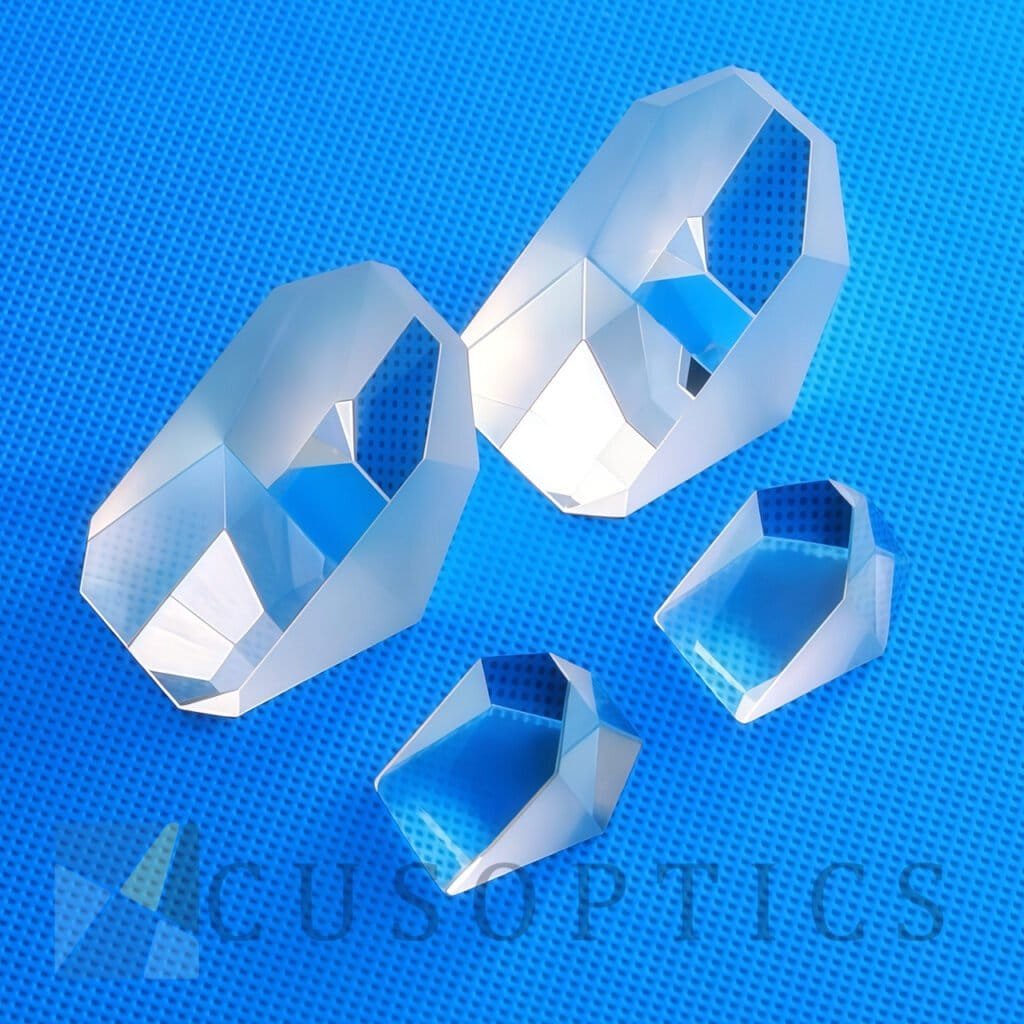
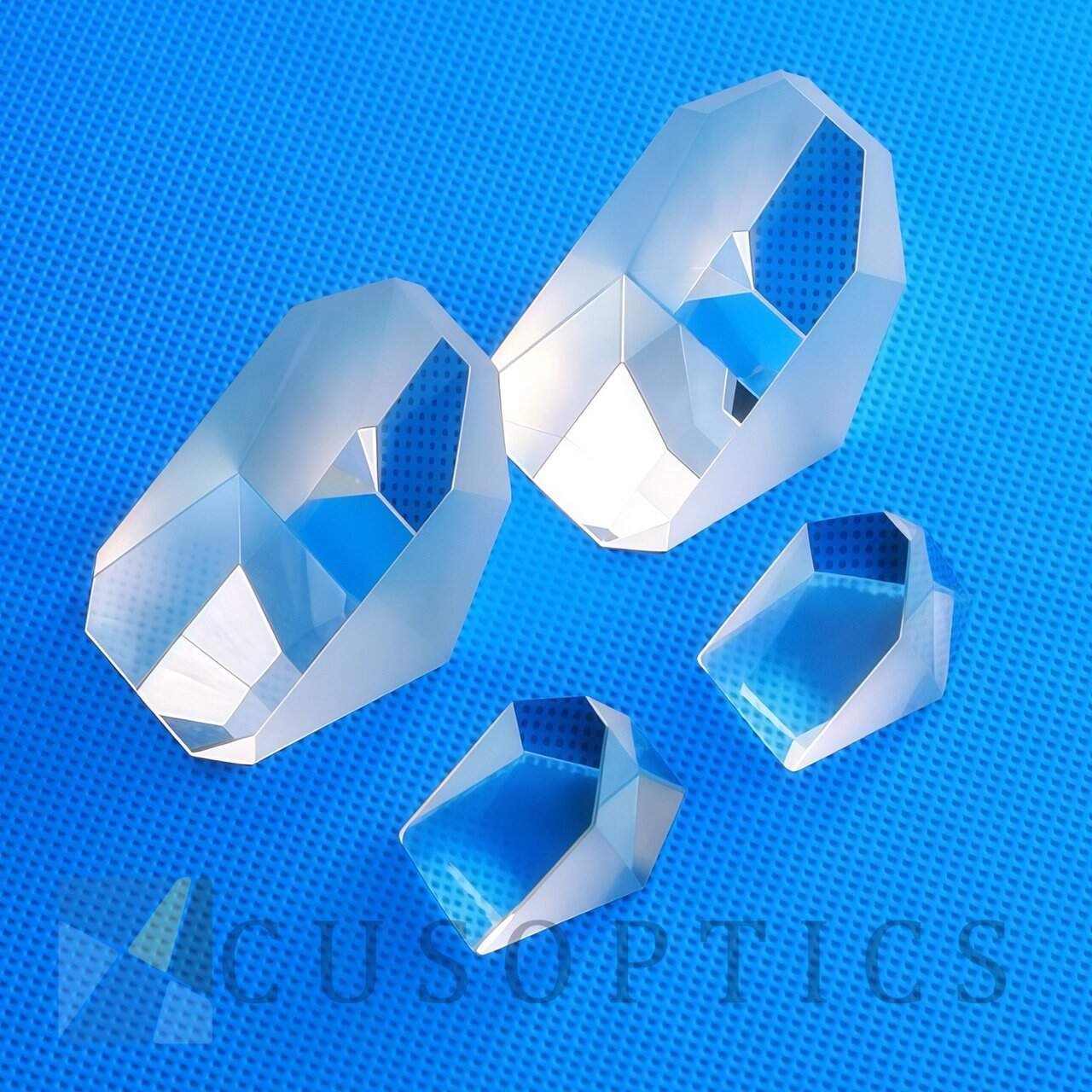
A roof prism, specifically a right-angle roof prism, is a precision optical component designed to deviate a light path by 90° while also correcting image orientation. Its defining feature is two reflective surfaces arranged at a 90° angle (the “roof”), which invert the image in the plane of the bend, resulting in a fully corrected, right-handed output image. This differs from a standard right-angle prism, which produces a mirror image.
To maximize performance and durability, these prisms are typically coated. The reflective roof edge often receives a protected aluminum or silver coating, while the entrance and exit faces are anti-reflection (AR) coated to minimize surface reflections and increase light transmission. This makes them essential for applications requiring compact, high-fidelity image erection, such as in high-end binoculars, viewfinders, periscopes, and various laser optical systems.
We offer a range of standard, coated roof prisms available as regular stock items. This ensures quick delivery for prototyping, educational use, and integration into systems where custom fabrication lead times are prohibitive. Our inventory provides reliable, precision-grade optics for immediate application in research, development, and instrumentation.
Features:
Plano-Convex Lens (PCX): Converges light. One flat, one convex surface. Minimizes spherical aberration for collimating or focusing light. Common in laser applications.
Plano-Concave Lens (PCV): Diverges light. One flat, one concave surface. Used for beam expansion, projection, or correcting aberrations in optical systems.
Double-Convex Lens (DCX): Symmetrical converging lens. Two convex surfaces. General-purpose lens for magnification and imaging, but introduces more aberration than PCX.
Double-Concave Lens (DCV): Symmetrical diverging lens. Two concave surfaces. Used for beam expansion, image reduction, and as a simple negative lens in eyepieces.
Achromatic Doublet: Corrects chromatic aberration. A compound lens made by cementing a convex (crown glass) and a concave (flint glass) element. Essential for high-quality imaging.
Meniscus Lens: Has one convex and one concave surface. Can be positive or negative. Primarily used to minimize spherical aberration in systems like camera lenses.