
The Differences Between Optical Coating & Vacuum Coating
- The differencesin nature
Optical coating refers to the process of depositing metallic or dielectric thin films onto the surface of optical materials. The primary purpose of such coatings is to modulate optical properties, including minimizing or enhancing reflection, enabling beam splitting, color separation, filtering, and polarization control. The most common coating techniques can be divided broadly into physical and chemical methods.
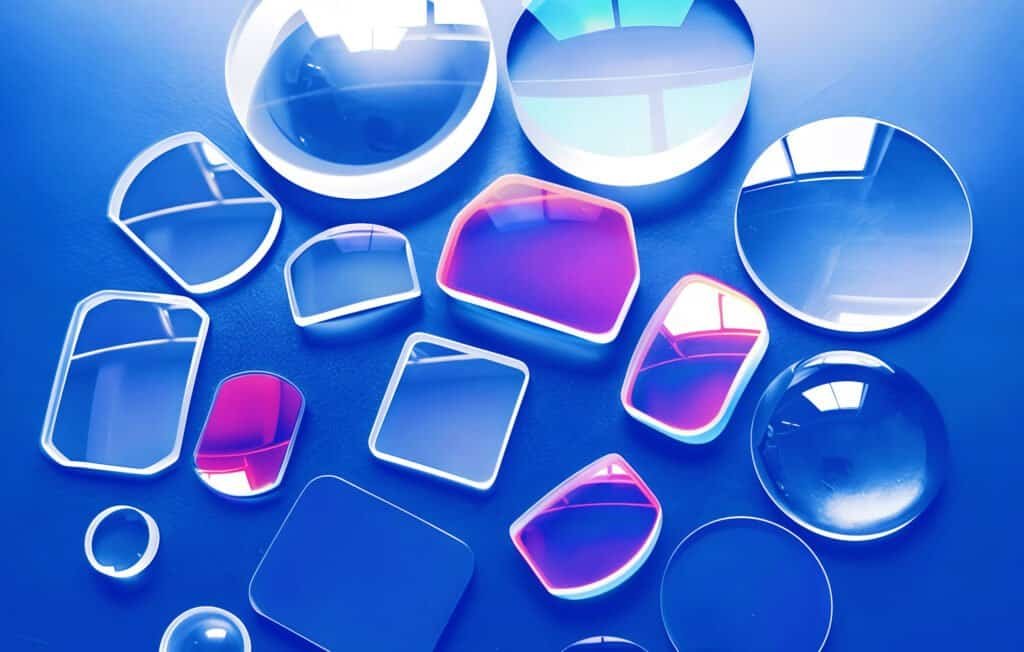
Vacuum coating is a technology that involves heating metallic or non-metallic materials under high vacuum conditions, causing them to evaporate and subsequently condense on the substrate surface, thereby forming a uniform thin film.
- The difference in coating principles
Vacuum coating represents a new technological development based on vacuum technology. The technology is capable of absorbing electron beams, molecular beams, ion beams, plasma beams, radio frequency and magnetic control through physical or chemical methods. This provides a new process for scientific research and actual production. In essence, this process involves the evaporation or sputtering of metals, alloys, or compounds in a vacuum, which results in their solidification and subsequent deposition on the substrate for coating.
Optical interference is of great significance in thin-film optics. The most common method in optical thin film technology is vacuum sputtering, which involves the deposition of thin films on glass substrates. It is typically used to regulate the reflectance and transmittance of the incident light beam on the glass substrate to meet specific requirements.
In recent years, the development of laser technology has led to higher demands for the reflectivity and transmittance of coatings, driving the growth of multi-layer high-reflectivity films and broadband anti-reflective films. In a variety of applications, polarizing reflective films, colour separation films, cold light films, and interference filters have all been manufactured using high-reflectivity films.
- The differences in methods and materials
- Methods and materials for vacuum coating
Vacuum evaporation: The substrate, which is to be coated, is placed in the coating chamber. Following the pumping process, the film material is subjected to a high temperature, with steam reaching approximately 13.3Pa. Steam molecules rise to the surface of the substrate, where they form a film.
Chemical vapor deposition: The deposition of thin films is achieved through the thermal decomposition of selected metals or organic compounds.
Ion plating: Ion plating can be defined as a combination of vacuum evaporation plating and cathode sputtering plating, exhibiting the characteristics of both processes.
- Methods and materials for opticalcoating
Magnesium fluoride: It is a colourless, tetragonal powder with a high degree of purity. The optical coating produced with it is capable of enhancing transmittance without the formation of fracture points.
Silicon dioxide: It is a colourless and transparent crystal, with high hardness and a high melting point. Silicon dioxide is characterized by its high purity, making it well-suited for the production of high-quality SiO2 coatings. Its evaporation state is satisfactory and there is no collapse points. According to the usage requirements, its categorization can be divided into the following three types: ultraviolet rays, infrared rays, and visible light.
Zirconia: It is in a white recrystallized state, with a high refractive index, high heat resistance, stable chemical properties and high purity. It can be used to prepare high-quality zirconia coatings without generating fracture points.
