
An Introduction and Material Analysis of Optical Glass Lenses
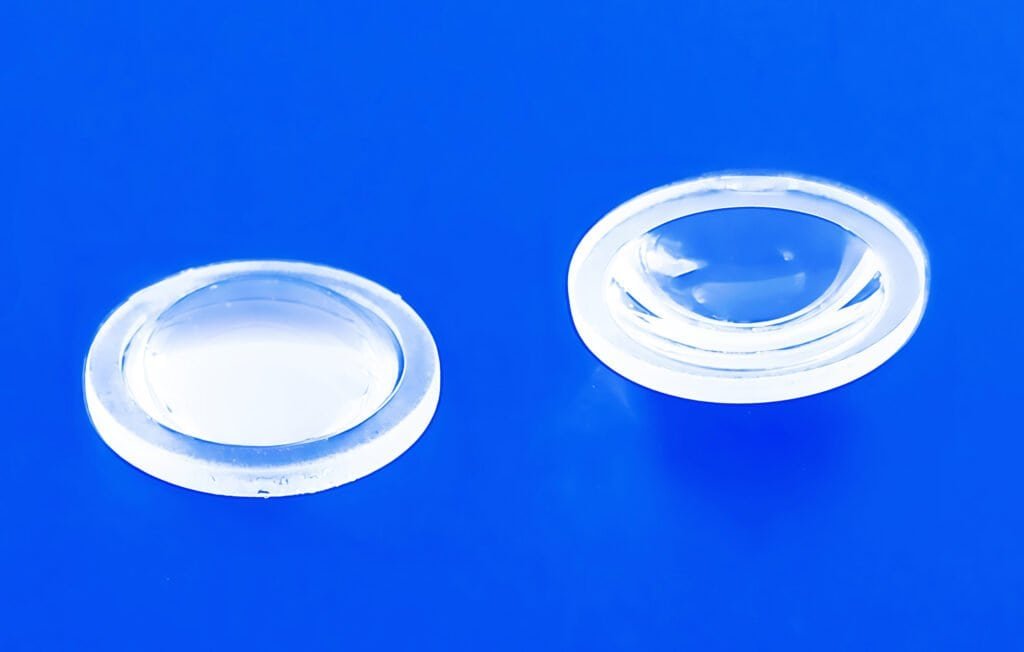
Lenses are extensively utilized across a wide range of fields, including security systems, automotive electronics, digital cameras, laser technology, and optical instruments. With the continuous development of the market, lens technology is becoming increasingly widely applied.
A lens operates based on the principle of light refraction and is an optical component fabricated from transparent materials such as glass or crystalline substances. It is a refractive element whose surface structure typically consists of two spherical surfaces or one spherical surface and one plane, forming a transparent medium bounded by these surfaces. Lenses are capable of producing both real and virtual images.
- Convex Lens: Characterized by a thicker central region and thinner peripheral edges, convex lenses are categorized into three types: biconvex, plano-convex, and concavo-convex.
- Concave Lens: Featuring a thinner central region and thicker edges, concave lenses are classified into three types: biconcave, plano-concave, and concavo-convex.
A thin lens can be defined as a lens in which the thickness of its central part is relatively large in comparison to the radius of curvature on both sides. Early camera systems utilized a single convex lens, earning them the designation “single lenses.” As optical technology advanced, modern lenses evolved into compound systems comprising multiple convex and concave lenses arranged to collectively function, which is called “compound lenses.” Within such compound systems, concave lenses serve to mitigate various optical aberrations.
A lens is defined as an optical component composed of transparent materials, characterized by a surface that forms part of a spherical surface. A lens is generally composed of multiple lenses and can be categorized into two distinct types: plastic lenses and glass lenses. The cost of glass lenses typically exceeds that of plastic lenses. The most common lens structures used in cameras are: 1P, 2P, 1G1P, 1G2P, 2G2P, 4G, etc. The number of lenses is directly proportional to the cost. Therefore, a high-quality camera should use a glass lens, which offers superior imaging capabilities compared to plastic lenses. These lenses are particularly important in fields such as astronomy, military, transportation, medicine, and art.
Optical glass is characterized by high transparency, purity, colorlessness, uniform texture, and excellent refractive ability, thus making it the main raw material for lens production. Due to differences in chemical composition and refractive index, there are several types of optical glasses.
- Flint glass: Lead oxide is added to the glass composition to increase the refractive index (1.8804).
Crown glass: It is manufactured by incorporating sodium oxide and calcium oxide into the glass composition, thereby reducing its refractive index (the refractive index of barium crown glass is 1.7055).
